

Last Updated: October 31, 2026
Quick Summary
To choose beginner strength training equipment, answer four questions first: where you'll train, your total budget, what you're training for, and your space and setup time. Start with a mat and multi-level resistance bands for weeks 1-4, then add adjustable dumbbells and an adjustable bench for weeks 4-12.
- Adjustable dumbbells are the most space-efficient strength purchase a beginner can make, replacing a rack of fixed weights.
- Buy the upgrade tier only after 12 weeks of consistent training, since big purchases before a routine exists often get resold.
- Compare cost per use by dividing purchase price by the sessions you realistically expect in the first year.
- Check bands for a clear resistance rating per level and dumbbells for small weight increments before buying.
- Replace any band or cable showing fraying, thinning, or a nick, since a failing band can snap back toward your face.
Table of Contents
- Start With a Decision Framework, Not a Shopping List
- Free Weights vs Machines: Which Suits a Beginner
- Adjustable Dumbbells for Beginners: What to Check Before You Buy
- Resistance Bands vs Dumbbells: Picking Your Starting Resistance
- Strength Training Equipment for Small Spaces
- Home Gym Equipment on a Budget: Price Ranges and Cost Per Use
- How to Match Equipment to Muscle Groups and Training Goals
- Safe Setup, Proper Form, and Equipment That Lasts
- Build Your Starter Kit With Powers Sport & Fitness
- Frequently Asked Questions
Start With a Decision Framework, Not a Shopping List
Most people buy beginner strength training equipment backwards. They scroll through product pages, get drawn in by a sale, and end up with a bench they never adjust or a dumbbell set too heavy to lift. The smarter path is to answer four questions first, then shop. This guide walks through that framework, the free weights vs machines debate, and the gear that actually earns its place in a starter setup.
Here's the core idea: beginner strength training is not about owning more equipment. It's about owning the right equipment for your space, your budget, and the movements you'll repeat three times a week.
The four questions below narrow almost every decision you'll face. Answer them honestly before you add anything to a cart.
Four Questions That Narrow Every Equipment Choice
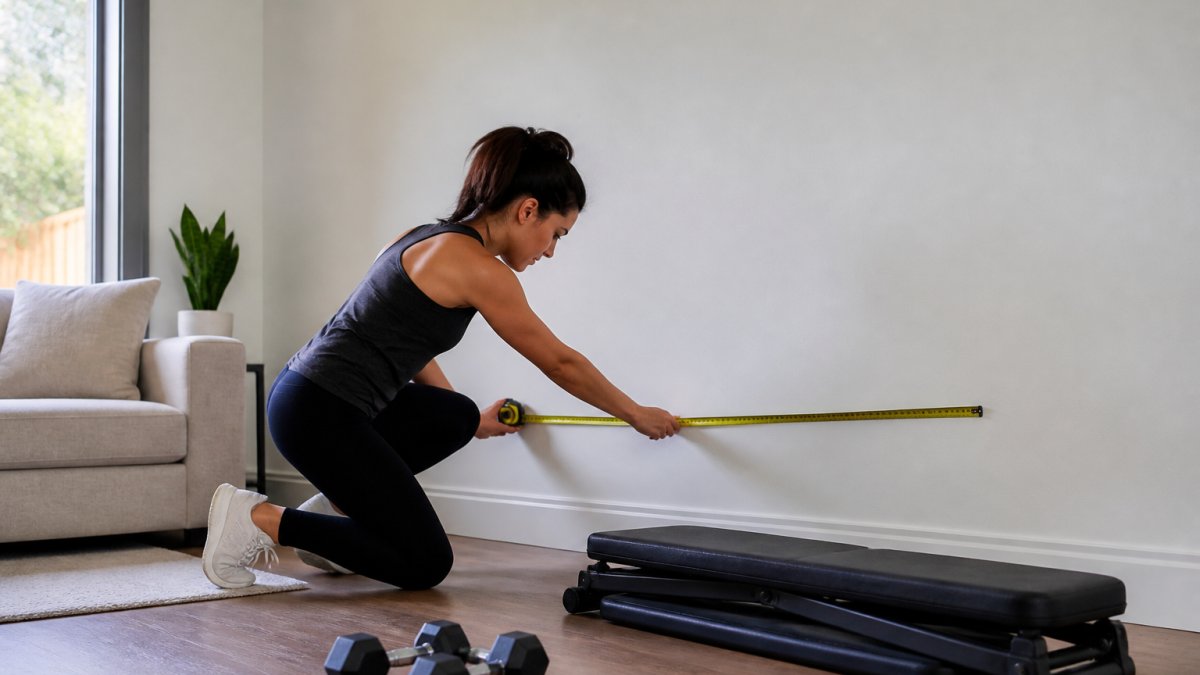
- Where will you train? A spare room, a garage, or a corner of a bedroom changes what fits. Small spaces favor resistance bands, adjustable dumbbells, and foldable benches.
- What's your total budget, including future add-ons? A realistic ceiling keeps you from overspending on one item and having nothing left for the rest.
- What are you training for? General strength, glutes and legs, upper-body pressing, or sport-specific work all point to different tools.
- How much space and setup time do you have per session? Equipment you have to drag out and reassemble tends to get skipped.
Free Weights vs Machines: Which Suits a Beginner
Most beginner guides frame this as a binary choice. It isn't. Free weights and machines solve different problems, and the right answer depends on how you'll actually train in the first three months. Use the comparison below as a decision tool, not a verdict.
The Real Trade-Offs, Side by Side
| Factor | Free Weights (dumbbells, barbells) | Machines (cable, plate-loaded, selectorized) |
|---|---|---|
| Learning curve | Steeper, you manage balance and path | Gentler, the machine sets the path |
| Stabilizer demand | High, core and stabilizers work constantly | Low, the frame does the stabilizing |
| Progression | Add weight in small increments; easy to track | Adjust pin or plate; also trackable |
| Space | Small footprint for adjustable dumbbells | Larger, fixed footprint per machine |
| Cost efficiency | High, one pair covers many movements | Lower, one machine covers fewer patterns |
| Safety without a spotter | Requires care at heavy loads | Safer to push close to failure alone |
| Transfer to real-world strength | Strong, matches how you lift objects | Moderate, guided patterns |
When Free Weights Are the Better First Buy
Choose free weights first if:
- You want the widest exercise variety from the fewest purchases.
- You're training in a small space and need gear that stows.
- You want strength that carries into daily life, carrying, lifting, pushing.
- You're willing to spend the first few weeks learning form at light loads.
A pair of adjustable dumbbells plus a bench covers pressing, rowing, squatting, hinging, and lunging, the movement patterns most beginner programs are built on. You can browse the strength training resistance equipment categories to see what options exist before deciding between free weights and machines.
When Machines Are the Better First Buy
Choose a machine first if:
- You're training alone and want to push close to failure without a spotter.
- You have a specific isolation goal (leg extension, leg curl, chest press) that free weights make awkward.
- You want to remove balance from the equation while you build a base.
- You have dedicated floor space that won't need to be reclaimed.
The Setup and Safety Details Beginners Underestimate
With free weights, the failure points are form and load selection. Start lighter than you think you need, and add resistance only when the last rep still looks clean. A bench with multiple back positions lets you press at an incline or flat without buying two pieces.
With machines, the failure points are setup and range of motion. Seat height and pad position change which muscles do the work; a poorly adjusted machine can feel fine while training the wrong thing. Take the extra minute to align the pivot with your joint before loading.
A Quick Decision Rule
If you can only buy one thing and you're training at home in a shared space, buy adjustable dumbbells. If you're training alone and want to train close to failure safely, buy a machine or a rack with safeties. If you can buy two things, buy dumbbells and a bench first, then let your routine tell you which machine earns the third purchase.
Adjustable Dumbbells for Beginners: What to Check Before You Buy
Adjustable dumbbells are the single most space-efficient strength purchase a beginner can make. One pair replaces a rack of fixed weights and lets you progress in small jumps, which matters when you're learning.
Check these before you buy:
- Weight range and increments. You want a low starting weight and small steps between levels, so you can progress without stalling.
- Adjustment mechanism. Dial, pin, or slide systems differ in speed and durability. Pin systems are the most forgiving.
- Grip and coating. Look for knurled or textured handles and a coating that resists peeling and fraying.
- Footprint and storage. Some sets need a cradle; others sit flat.
A common mistake is buying a set that starts too heavy.
Resistance Bands vs Dumbbells: Picking Your Starting Resistance
Resistance bands and dumbbells solve different problems. Bands offer adjustable resistance with almost no space and a gentle learning curve, making them ideal for warm-ups, glute work, and rehab-style movements. Dumbbells give you measurable, consistent load that's easier to track for progressive overload.
Use both. Bands are the better starting point if you're brand new, training in a tight space, or easing back from an injury. Dumbbells take over once you want to load compound lifts and track strength progression in numbers.
If you want a concrete place to start, a multi-level band set lets you begin light and move up as form improves.
| Option | Best For | Space Needed | Progression Style |
|---|---|---|---|
| Resistance bands | Beginners, small spaces, warm-ups | Minimal | Add bands or levels |
| Adjustable dumbbells | Compound lifts, tracking load | Small | Increase weight in steps |
| Fixed dumbbell set | Simple, no adjustment | Moderate to large | Buy heavier pairs |
| Weight machines | Guided, safe isolation | Large | Adjust pin/plate |
Strength Training Equipment for Small Spaces
Small-space training is a design problem, not a compromise. The goal is equipment that folds, stacks, or doubles as something else, so your living room stays a living room. A foldable home machine can cover glutes, legs, and full-body work while saving space.
Priorities for tight spaces:
- Foldable or stowable pieces. A bench that folds flat disappears between sessions.
- Multi-use tools. A push-up board or band set covers several muscle groups in one small package.
- Vertical storage. Bands and straps hang; they don't need floor space.
Home Gym Equipment on a Budget: Price Ranges and Cost Per Use
Budget home gym equipment isn't about buying the cheapest thing. It's about cost per use, and about buying in stages so you don't sink money into gear before you've proven you'll use it. Most beginner guides list equipment; fewer give you a buying order. This section does.
A Staged Buying Plan: Essentials First, Upgrades Later
Think of your setup in three stages. Each stage should be justified by consistency, not enthusiasm.
Stage 1, Minimum viable setup (weeks 1-4).
Unleash Your Strength with the Powerflex 8™ Resistance Band Set – The Ultimate →
- A mat and a multi-level resistance band set.
- Goal: establish the habit and learn movement patterns with low load.
- Why: lowest cost, smallest footprint, and enough resistance to train every major muscle group at a beginner level.
Stage 2, Core setup (weeks 4-12).
- Adjustable dumbbells plus an adjustable bench.
- Goal: load compound lifts and track progression in numbers.
- Why: this is the backbone of most starter setups and covers pressing, rowing, squatting, hinging, and lunging.
Stage 3, Upgrade tier (after 12 weeks of consistent training).
- One machine or rack for guided or heavier work, chosen to fill a gap your routine has exposed.
- Goal: add isolation work or heavier loading safely.
- Why: buying this first is the most common beginner mistake, big purchases before a routine exists often end up resold.
Cost Per Use: The Number That Actually Matters
A band set used four times a week beats a machine used twice a month, even if the machine cost more. To compare fairly, divide the purchase price by the number of sessions you realistically expect in the first year.
- A low-cost item used often can land in the pennies-per-session range.
- A high-cost item used rarely can cost more per session than a gym membership.
Be honest about the denominator. Beginners overestimate how often they'll train; use your actual current routine as the baseline, not your intended one.
Quality, Durability, and What to Check Before You Buy
Price tiers matter less than the details that fail first. Before buying any piece:
- Bands: check for a clear resistance rating per level.
- Dumbbells: look for small weight increments so you can progress without stalling.
- Benches: check the load capacity and the number of back positions.
Also confirm the return policy before you buy. A clear return window means a poor fit isn't your problem to absorb.
Maintenance, Storage, and Safe Home-Gym Setup
A starter setup lasts longer with a few habits:
- Inspect before each session. Check bands for nicks or thinning, cables for fraying, and bench hardware for looseness.
- Store vertically where possible. Bands and straps hang; they don't need floor space.
- Keep a clear training zone. A mat's footprint plus arm's reach is the minimum safe area for dumbbell work.
- Re-tighten hardware monthly. Bolts on benches and machines loosen with use.
The Trap to Avoid
The trap is buying the upgrade tier first. Beginners who spend big before establishing a routine often end up reselling gear. Start with the core tier and let your consistency justify the next purchase, and when you do upgrade, buy to fill a gap your training has revealed, not a gap a product page has suggested.
How to Match Equipment to Muscle Groups and Training Goals
Equipment should follow your goals, not the other way around. Map your target muscle groups to the tools that train them well, then buy only what covers the gaps.
- Lower body and glutes: dumbbells, bands, and a squat or leg-press style machine.
- Upper body pressing: dumbbells, a bench for incline and flat pressing, and a push-up board for chest and triceps.
- Back and pulling: bands for rows and face pulls; a pull-up bar if you have the space.
- Core: a mat, a stability ball, and bodyweight work.
An adjustable bench unlocks a lot here because incline, flat, and decline positions let one piece serve several muscle groups. The 7 Adjustable Positions Fitness Bench supports that range, with a maximum load capacity of 160 kg and a space-saving design.

Safe Setup, Proper Form, and Equipment That Lasts
Safety and durability are the two things beginners underestimate most. Proper form protects your joints; quality equipment protects your investment.
Watch out: skipping a warm-up and loading too heavy too soon is the fastest route to a strain that sidelines you for weeks. Start lighter than you think you need, and add resistance only when the last rep still looks clean.
On durability, check the details that fail first: cable coatings, band material, and stitching. Look for clear return policies too, so a damaged shipment isn't your problem to absorb.
Build Your Starter Kit With Powers Sport & Fitness
You don't need a full gym to start. You need a framework, a few versatile pieces, and the discipline to use them consistently. That's the whole game with beginner strength training equipment.
At Powers Sport & Fitness, we stock resistance bands, benches, and strength training tools, backed by free shipping, free returns, a 30-day return policy, and 24/7 customer support. If you're not sure what fits your space or goals, get in touch with our customer support team around the clock.
Frequently Asked Questions
What strength training equipment should a beginner buy first?
Start with one adjustable resistance tool and one support item. A set of resistance bands or a pair of adjustable dumbbells covers most upper and lower body movements, and a workout mat or bench makes floor work comfortable. Add a bench only when your routine includes pressing or rowing movements that need support. Buying one piece at a time lets you test whether you actually use it before spending more, which keeps early costs low and stops unused gear piling up at home.
Can beginners build strength at home without a full gym?
Yes. Progressive overload, the principle of gradually adding resistance or reps, works with bands, dumbbells, and bodyweight movements just as it does with machines. A beginner strength training routine built on squats, presses, rows, and hinges can run for months with a single adjustable dumbbell set or a band set with several resistance levels. The limiting factor is usually consistency and form, not the amount of equipment you own.
Are resistance bands or dumbbells better for beginners?
It depends on space, budget, and how you like to train. Bands cost less, store in a drawer, and suit small apartments, while dumbbells give you measurable weight selection and a familiar feel for pressing and rowing. Many beginners use both: bands for warm-ups, glute work, and travel, dumbbells for main lifts. If you can only buy one, pick the option that matches the space you have and the exercises you will actually do each week.
How much space do I need for beginner home gym equipment?
A clear floor area of roughly 2 by 2 metres covers most beginner routines, including a bench, a mat, and room to lie down with arms overhead. Foldable benches and band sets shrink that footprint further, which matters in apartments. Measure your space before ordering, check the folded dimensions of any bench, and leave clearance on all sides so you can move without hitting furniture or walls during a set.
What should I look for when buying adjustable dumbbells for beginners?
Check the weight range, the adjustment mechanism, and the maximum load rating. Look for a dial or pin system you can change quickly between sets, a secure locking collar, and a warranty that covers the mechanism. Read the return policy too, because heavy items are expensive to ship back if the weight selection feels awkward in practice.
How much should a beginner spend on home gym equipment?
A sensible starter budget covers one resistance tool and one support item rather than a full kit. Resistance band sets sit at the low end, a foldable push-up board or ankle band set costs a little more, and an adjustable bench is the largest single purchase at around 179.00 at Powers Sport & Fitness. Spread purchases over a few months, add gear only when your routine demands it, and factor in free shipping and free returns when comparing total cost.
What equipment is safest for someone new to strength training?
Bands and fixed dumbbells are the most forgiving starting points because you can stop a rep at any point without a spotter. Machines and selectorized equipment guide the movement path, which helps with form but limits range of motion. Whatever you choose, check the maximum load rating, set up on a non-slip surface, and start with a resistance level where you can complete 10 to 12 controlled reps with proper form before adding weight.
The hardest part isn't choosing equipment. It's starting. Pick one tool, commit to three sessions a week, and let consistency do the rest. Get started with Powers Sport & Fitness and build a starter kit that grows with you.
